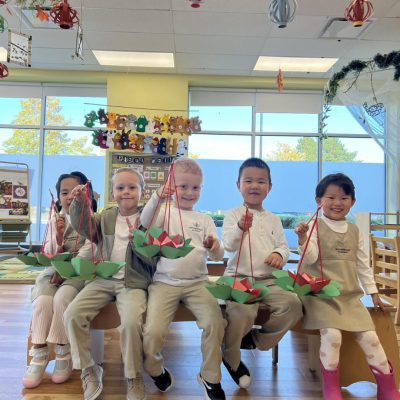
Every classroom has children who jump into an activity right away, and children who prefer to watch first. Some children need to understand the rhythm of a room before they join it. They notice who is speaking, where the materials are, how the game works, and what the adults expect. At Rothewood Academy, we often think of these children as thoughtful observers. They may be quiet at first, but their minds are active, curious, and deeply engaged.
For parents, it can sometimes be hard to know what to make of this quieter style of participation. A child may come home from daycare or preschool having said very little during group time, but still remember the songs, repeat a line from a story, or act out something they saw another child do. This is meaningful communication. Listening, observing, and processing are all part of learning how to participate.
In the early years, children develop communication skills in their own time and in their own way. Some children use many words early. Others rely on gestures, facial expressions, movement, sound, or imaginative play while language continues to grow. A thoughtful observer may be taking everything in long before they feel ready to speak in front of the group. They may be building confidence quietly, one moment at a time.
Drama activities are especially helpful for emerging communicators because they give children many ways to participate. A child can listen to a story, copy an action, hold a prop, move like an animal, make a sound, stand beside a friend, or take on a small role. Each of these steps matters. Participation does not have to begin with speaking. For many children, confidence begins with being included in a way that feels safe.
At Rothewood, drama is designed with this gradual growth in mind. Our educators create activities where children can move from watching to joining when they feel ready. A group may begin with a familiar song, then add simple movements, then introduce puppets, scarves, costumes, or pretend roles. This gentle structure helps children understand what is happening while still leaving room for imagination. Predictability gives children something steady to hold onto, and creativity gives them space to express themselves.
For a thoughtful observer, a puppet can be a wonderful bridge. Speaking directly to a group may feel like a big step, but speaking through a puppet can feel playful and manageable. A child might first watch the educator use the puppet, then touch it, then make it wave, then offer one sound or word. Over time, that same child may begin telling the puppet what to do or using it to speak to another child. These moments are small on the outside, but they can be significant steps in a child’s communication journey.
Pretend play also allows children to try language within a shared story. A child who rarely speaks during circle time may become very expressive while pretending to make soup, care for a baby doll, build a bus, or run a pretend shop. Drama gives children a reason to communicate that feels natural. They are asking for a bowl, inviting a friend onto the bus, warning that the dragon is coming, or explaining what happens next. Language grows because the play gives it purpose.
Our educators pay close attention to these moments. They notice when a child moves closer to the group, copies an action, smiles at a song, repeats a phrase, or watches a scene with interest. These cues help educators understand how to support the child without rushing them. A gentle invitation might sound like, “You can hold the scarf if you would like,” or “I saw you watching the bear puppet. He can sit beside you.” These small choices help children feel respected and in control of their participation.
Drama also helps children build social confidence. The thoughtful observer often learns by studying the group first. They may watch how peers take turns, how a game begins, how a story changes, or how another child asks to join. When they are ready, they can enter with a stronger sense of what to do. This kind of observation supports social understanding, empathy, and self-regulation.
For families, it is helpful to remember that communication is broader than talking. A child who listens carefully, watches closely, and joins through movement is communicating. A child who whispers one line after weeks of observation is communicating. A child who retells the whole drama activity at home after saying little at school is communicating. Progress may appear slowly, but it is still progress.
At Rothewood Academy, we believe every child deserves time to find their voice in a way that feels true to them. Through drama, storytelling, movement, and group play, our Scholars are invited to listen, observe, participate, and eventually lead when they are ready. The thoughtful observer is already learning. With warmth, patience, and the right opportunities, that quiet watching can become confident expression.
If you would like to see our schools, contact one of our Rothewood Academy schools to schedule an in-person tour.