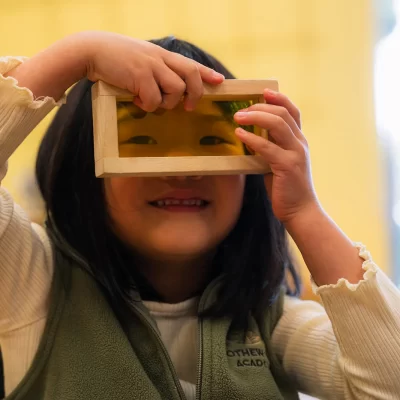
Every child has a voice. Some children use it loudly and quickly, sharing every idea as soon as it comes to mind. Others need more time. They watch first, listen carefully, and wait until the room feels safe enough to step in. At Rothewood Academy, we understand that confidence grows in different ways for different children. Our role is to create a gentle, supportive environment where each child can find their own rhythm, build trust, and begin to share themselves in ways that feel natural.
In the early years, confidence is closely connected to belonging. Children are more willing to speak, try, move, imagine, and participate when they feel secure with the adults and peers around them. That sense of safety is built through warm relationships, predictable routines, and everyday moments of encouragement. A child who feels seen is more likely to take small risks, such as joining a group game, offering an idea during storytime, choosing a role in pretend play, or trying a new activity alongside classmates.
Creative play is one of the most natural ways children begin to express themselves. Through pretend play, drama, music, movement, storytelling, and group games, children can explore ideas without pressure. They might become a shopkeeper, a firefighter, a parent, a dragon, a chef, or a teacher. They might use a scarf as a cape, a block as a phone, or a cardboard box as a house. These playful moments help children practise language, social skills, imagination, and emotional expression all at once.
Drama is especially powerful because it gives children a safe way to try on different roles. A child who feels shy speaking as themselves may feel more comfortable speaking as a character. They can use a puppet, costume, prop, or pretend scenario to share ideas with a little more distance. This can make communication feel easier and more playful. Over time, those small moments of expression build confidence. The child who once whispered to a puppet may later offer a suggestion to the group, lead a pretend scene, or tell a story in their own words.
Group play also helps children learn that their ideas matter. When children build a pretend restaurant together, act out a story, or create a game in the classroom, they practise listening, negotiating, and contributing. One child may decide who is cooking. Another may suggest what food is served. Another may create the menu or welcome the customers. These exchanges help children understand how their voice fits within a shared experience. They also learn that a group can hold many ideas at once, and that play becomes richer when everyone has a chance to contribute.
At Rothewood, educators guide this process with care. We do not rush children into participating before they are ready. Some children need to observe a few times before joining in. Some prefer to participate through movement before words. Some begin by playing beside others and gradually move into shared play. Our educators watch for these cues and provide encouragement that respects each child’s comfort level. This kind of attentive guidance helps children feel supported rather than pushed.
This approach helps children build confidence without feeling overwhelmed. A gentle invitation can mean more than a direct demand. An educator might say, “You can be the helper when you’re ready,” or “I noticed you had an idea for the story.” These small openings let children know their participation is welcome while giving them space to choose the moment that feels right. When children are given time to enter play at their own pace, participation begins to feel like something they own.
Creative play also supports emotional growth. Young children often feel big emotions before they have the words to explain them. Through drama and pretend play, they can explore feelings in a way that feels manageable. A child might act out taking care of a sick stuffed animal, building a home during a storm, or helping a friend who feels sad. These scenes give children a way to process experiences, practise empathy, and build emotional language. Play helps children rehearse care, bravery, problem-solving, and connection in ways they can understand.
Storytelling is another meaningful part of this process. When children help create a story, they practise sequencing, memory, imagination, and language. They learn that their ideas can shape what happens next. A story may begin with one child’s suggestion and grow through the contributions of the whole group. This shared storytelling helps children listen closely to one another, build on ideas, and feel the joy of being part of something created together.
As children become more comfortable sharing ideas, they also begin to develop leadership. Leadership in early childhood often looks simple and beautiful. It might be a child inviting a friend into a game, suggesting a new ending to a story, deciding how to arrange chairs for a pretend bus, or helping another child understand the rules of a shared activity. These moments show growing confidence, cooperation, and self-trust. They also show that children are beginning to see themselves as capable contributors.
For families, it can be helpful to remember that confidence does not always look outgoing. A quiet child who joins a song with hand actions is building confidence. A child who watches a group game closely before joining is building confidence. A child who uses one new word during pretend play is building confidence. A child who stands near the group one week and joins the circle the next is building confidence. Progress often happens in small steps, and those steps deserve to be recognized.
At Rothewood Academy, we believe children thrive when they are given room to grow into themselves. Through drama, group play, storytelling, and imaginative exploration, our Scholars learn to share their thoughts, connect with others, and trust their own ideas. In a caring environment, every child can find their voice at a pace that feels natural to them, supported by educators who understand that confidence is built through patience, practice, and belonging.
If you would like to see our schools, contact one of our Rothewood Academy schools to schedule an in-person tour.