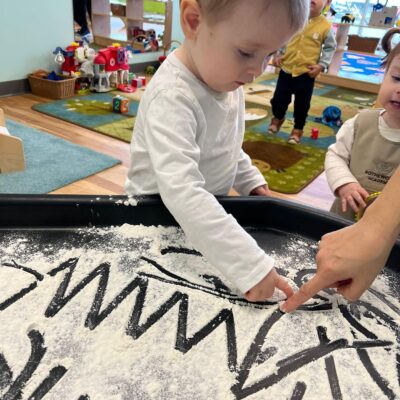
At Rothewood Academy, visual arts are one of the most powerful ways our Scholars make sense of the world around them. Before children have the vocabulary to fully explain what they are thinking or feeling, they have their hands. Through painting, drawing, sculpting, cutting, and building, they shape ideas into something visible and tangible. In doing so, they are not only developing fine motor skills, they are developing voice.
Fine motor skills involve the small, precise movements of the hands, fingers, and wrists. These movements are foundational for everyday tasks such as buttoning a coat, turning pages, feeding independently, and eventually writing. In our classrooms, however, fine motor development is never isolated from meaning. When a child grips a crayon, squeezes clay, or carefully places pieces in a collage, they are strengthening muscles and coordination while also exploring how to represent what they know and feel.
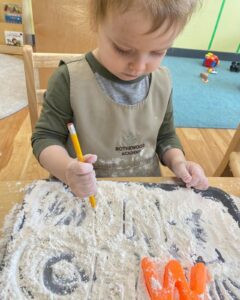
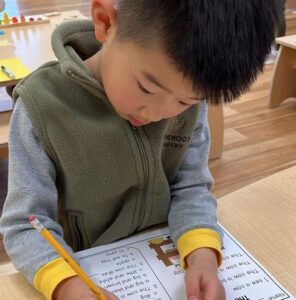
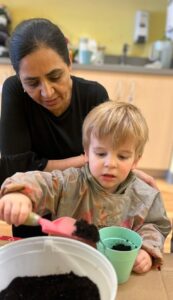
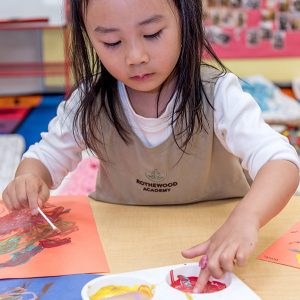
Art provides a language for children who may not yet have all the words. A Scholar who cannot fully articulate frustration might press hard into paper with dark strokes. A child processing excitement may fill a page with bright, energetic colour. Another might construct a careful, detailed scene that reflects a memory or observation. These creations often communicate complex thoughts long before a child can explain them verbally. Visual expression becomes a bridge between inner experience and shared understanding.
The physical act of creating is deeply connected to this process. Holding a paintbrush requires control and intention. Transitioning from a whole-hand grip to a more refined grasp reflects growing dexterity. Pinching, rolling, and shaping clay strengthens small muscles while allowing children to experiment with form and structure. Cutting along lines, threading beads, or layering paper pieces demands patience, focus, and planning. Each movement refines coordination, and each choice carries meaning.
Art also strengthens spatial awareness and problem-solving. When Scholars arrange shapes in a collage or balance elements in a drawing, they are thinking about relationships, proportions, and how parts create a whole. These cognitive skills support academic learning later on, but in early childhood they are rooted in exploration and curiosity. A child deciding where to place a figure in a painting is already considering perspective, narrative, and intention.
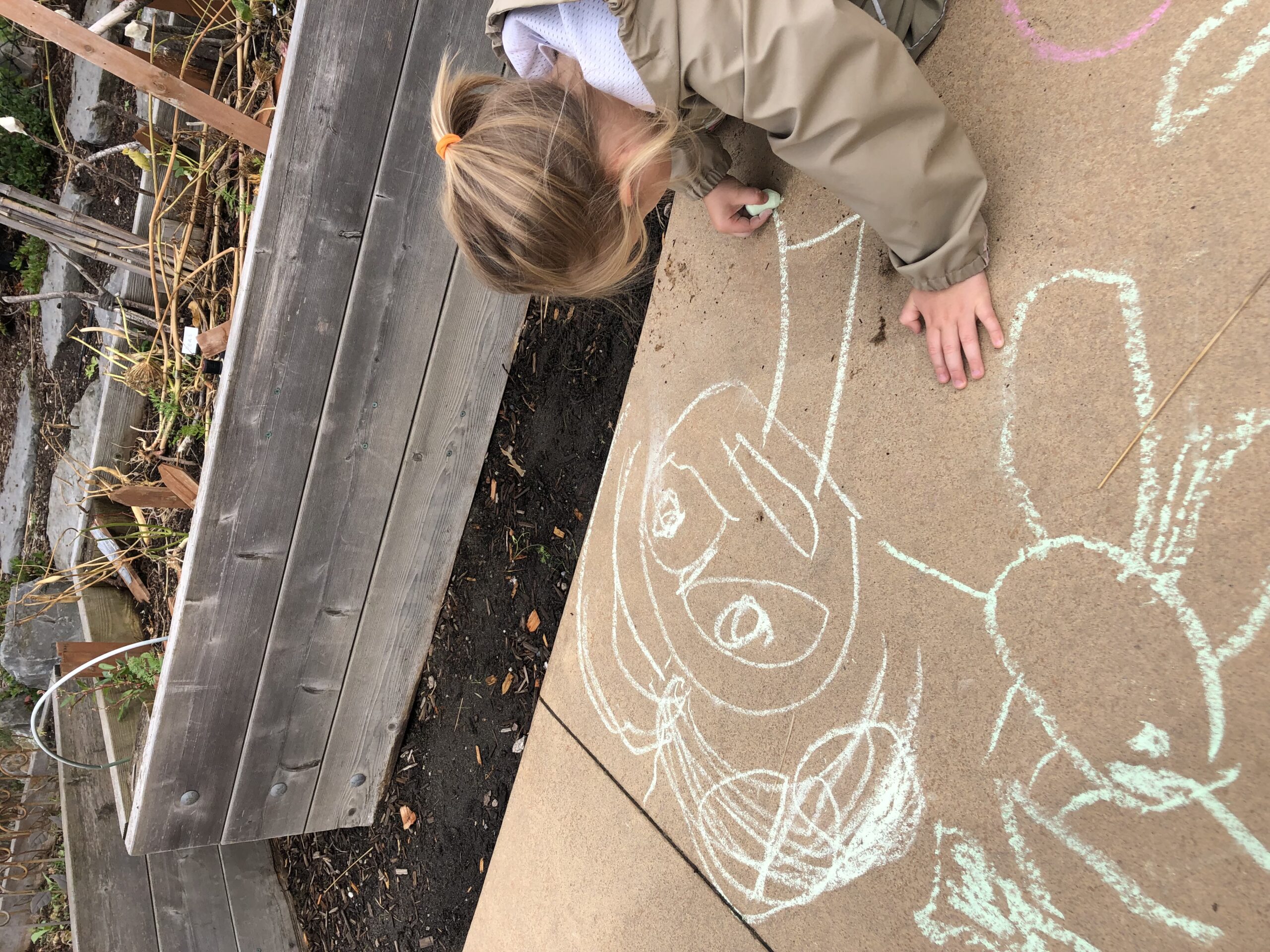
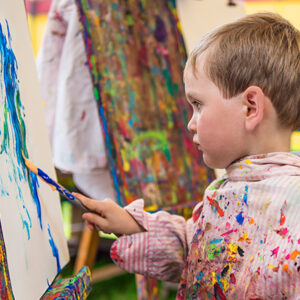
Large-scale art experiences further support this development. Painting at an easel, drawing with chalk outdoors, or working on oversized paper encourages full-arm movement and crossing the midline, strengthening the body’s foundation for fine motor control. As children gain stability and coordination, their hand movements become more controlled and precise, allowing for increasingly detailed expression.
Most importantly, visual arts nurture confidence. When children see their ideas take shape in front of them, they begin to trust their ability to communicate and create. They learn that their thoughts can be represented, shared, and valued. This builds emotional literacy alongside physical skill.
At Rothewood Academy, we view art as both a developmental tool and a window into each child’s understanding. Through their hands, our Scholars reveal what they notice, what they wonder, and what they feel. Fine motor strength grows with every mark and movement, but so does something larger: the ability to make sense of the world and to be understood within it.